Victorian Resources Online (archived)
Archived content — This page contains material from the Victorian Resources Online (VRO) website. It is no longer maintained and is provided for reference only. This content is hosted by CeRDI and is not endorsed by Agriculture Victoria.
Sitemap
8223-5 The Big Plain
|
This information has been developed from the publications:
- Sites of Geological and Geomorphological Significance in Central Gippsland (1981) by Neville Rosengren, M.S McRae-Williams and S.M Kraemers.
- Sites of Geological and Geomorphological Significance in the Gippsland Lakes Catchment (1984) by Neville Rosengren.
- Sites of Geological and Geomorphological Significance in East Gippsland, Victoria (1981) by Neville Rosengren, M.S McRae-Williams
Geological heritage sites, including sites of geomorphological interest and volcanic heritage sites, are under regular revision by the Geological Society of Australia, especially in the assessment of significance and values. Reference should be made to the most recent reports. See the Earth Science Heritage section of the Geological Society of Australia website for details of geological heritage reports, and a bibliography. |
Location: |
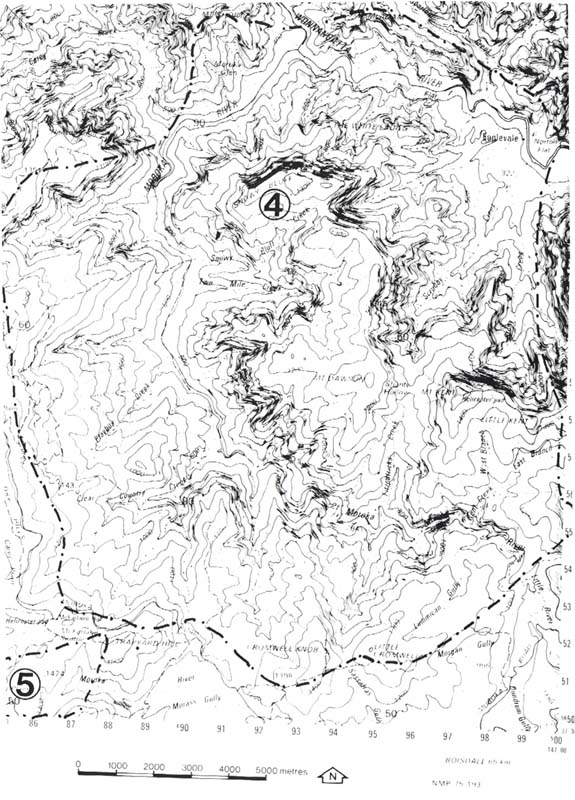
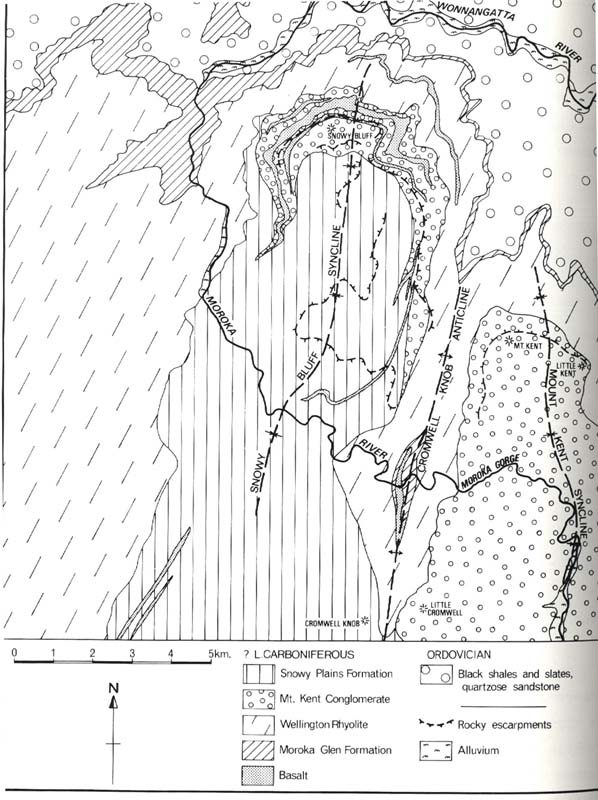
850500. 15 kilometres east of Mt Tamboritha. |
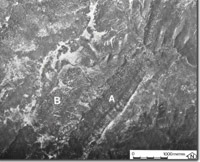 Big Plain. Vegetation stripes related to bedding (A) and of unknown origin (B). Big Plain. Vegetation stripes related to bedding (A) and of unknown origin (B). |
Abstract: |
Unusual striped vegetation pattern. |
Access: |
Track form McFarlane Saddle via Moroka Road. |
Ownership: |
Crown land. |
Geomorphology: |
The Big Plain is characterised by a curved, striped vegetation pattern, which is unique in this area although it has similarities to the vegetation stripes occurring at Reedy Creek (Site 8523-1). The origin of these features is unknown, but the vegetation pattern may reflect minor landform variations, e.g. stone stipes, black streams or other periglacial features. |
Significance: |
Unknown. Investigation may reveal a unique vegetation-landform relationship. |
Management: |
The vegetation pattern should not be disturbed until more detailed investigation has established the origin and the significance of the pattern. |