Dundas Trachyte Land Unit
There are a few isolated outcrops of Jurassic trachyte in the north-western portion of the study area, with the largest outcrop being north-east of Coleraine. There are also some colluvial slopes on the edge of trachyte outcrops on the Dundas and Merino tablelands.
The trachyte hills often have rock outcrop and reasonably shallow soils on the crests and upper slopes. The soils on these slopes are a complex mix of different soil forming processes. The main soil type on the upper slopes is a Brown Sodosol although Chromosols also occur (commonly sodic at depth). The soils on the colluvial slopes tend to be black cracking clays (Vertosols) or Black Vertic Sodosols. These soils are similar to the black soils of the dissected Merino Tablelands LU.
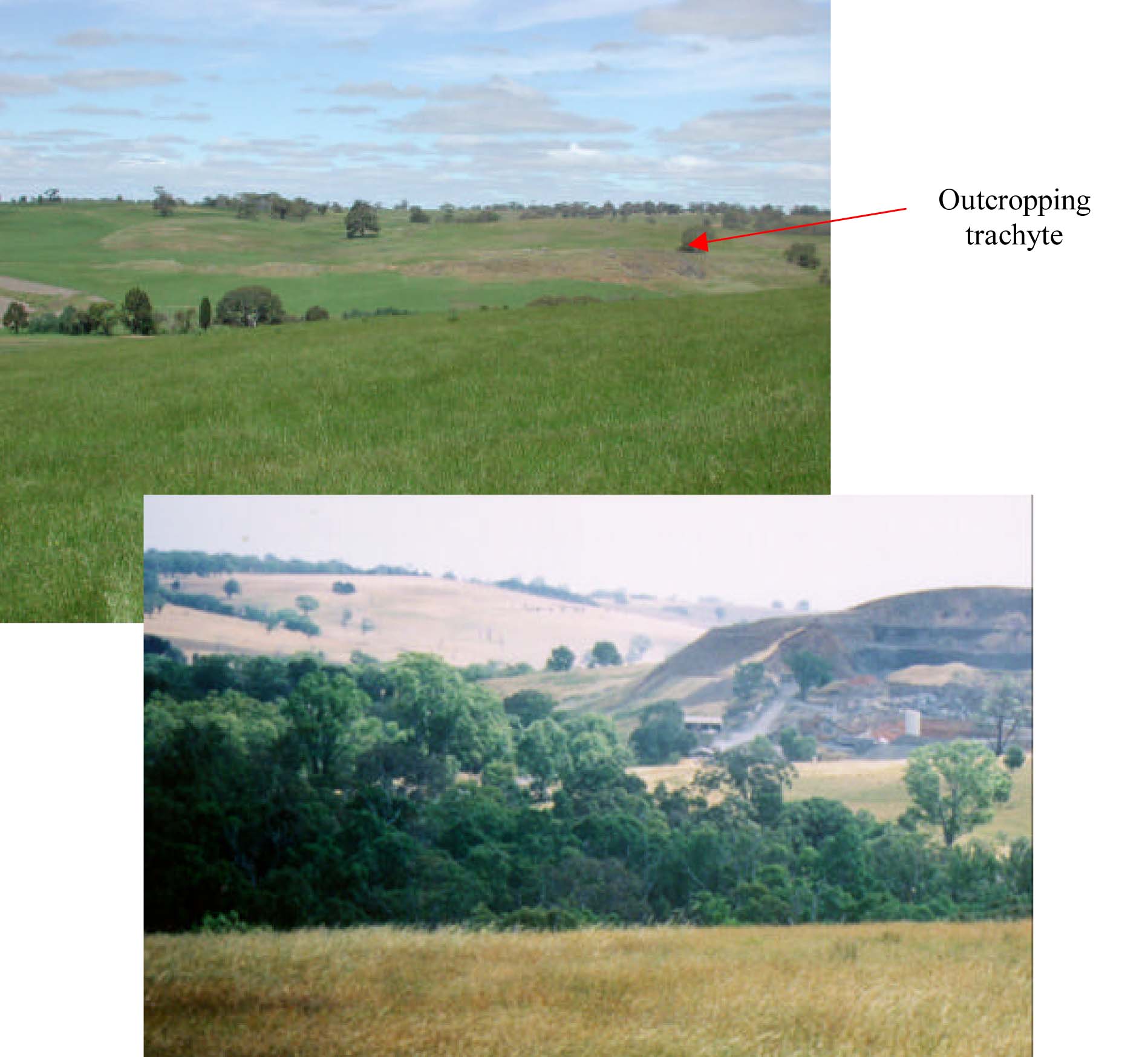
Plates 24 & 25 View from Nareen Station towards exposed trachyte (Plate 24)
and excavated trachyte south-west of Balmoral (Plate 25).
