Victorian Resources Online (archived)
GL102
| Site: GL102 | Land Unit: Merino Tablelands |
| Aust. Soil Class.: Melanic, Subnatric, Brown SODOSOL (confidence level 1) | |
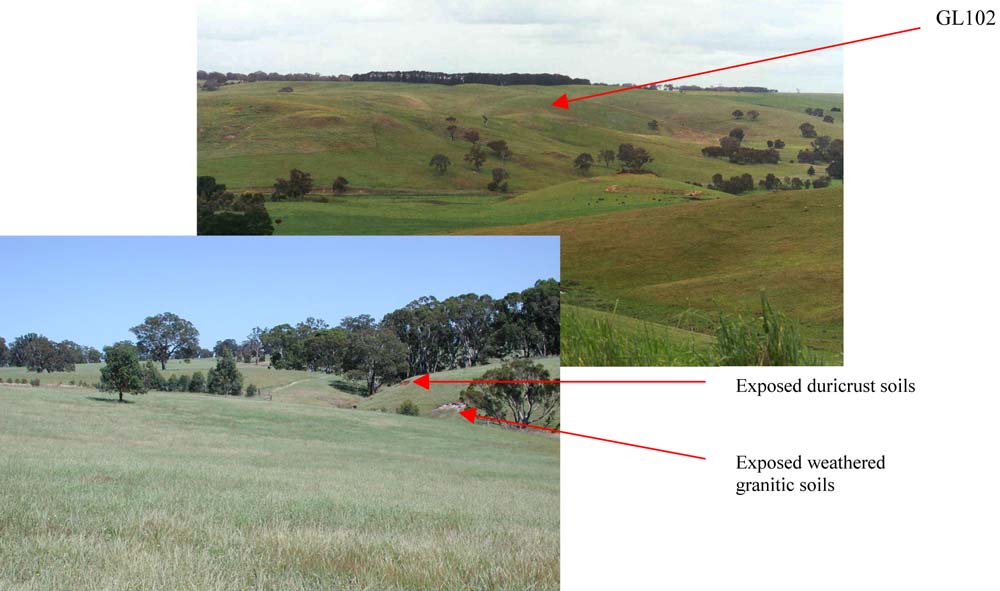 | General Land Unit Description: In the steeper dissected valleys, where the duricrust has been eroded, weathered parent material becomes exposed. The major soil type occurring on the steeper slopes leading off the flat surface of the Dundas Tablelands is a Brown Chromosol, typically with a ferric horizon above the clay subsoil, similar to this site. The soil is developed over a highly weathered mottled zone. This red and white mottling, sometimes referred to as ‘tiger mottles’ is thought to be the result of fluctuating watertables which occurred mainly in the Tertiary period. |
Site Description:
| Geology: Cainozoic duricrust | Landform pattern: Rolling low hills |
| Position in landscape: Crest | Internal drainage: Moderately well drained |
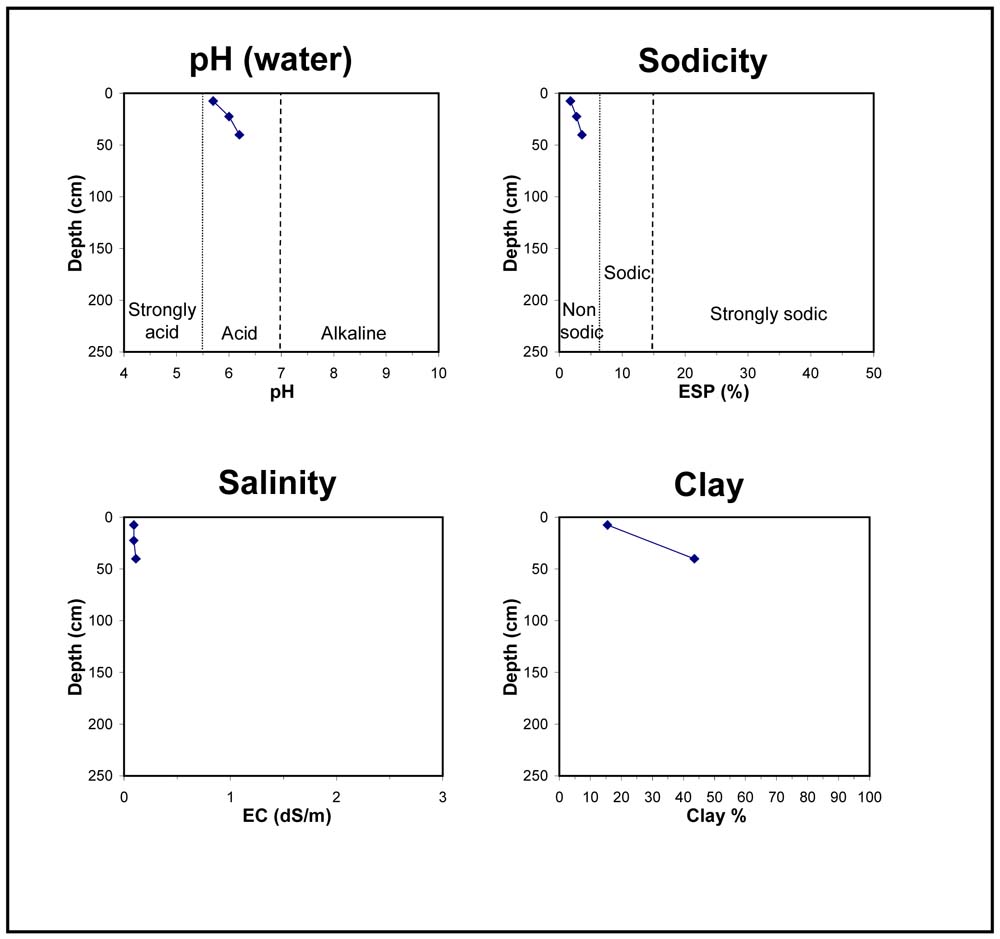
| A1 | 0-15 cm | Very dark greyish brown (10YR3/2), loamy sand, weak structure, firm consistence when dry, small round ferricrete pebbles are common (2-5 mm), pH 5.7. Transition to: |
| A3 | 15-30 cm | Dark brown (10YR3/3), sandy clay loam, apedal structure, firm consistence when dry, medium rounded ferruginised nodules are abundant (5-10 mm), pH 6.0. Transition to: |
| Subsoil | ||
| B21 | 30-50 cm | Yellowish brown (10YR5/6), sandy light clay, weak to apedal structure, pH 6.2. |
Key profile features:
- Ferruginous nodules are abundant above the clay
- Strong textural contrast between topsoil and subsoil