Victorian Resources Online (archived)
GL39
| Site: GL39 | Land Unit: Nelson Plains and Dunes |
| Aust. Soil Class.: Basic, Petrocalcic, Arenic RUDOSOL (confidence level 4) | |
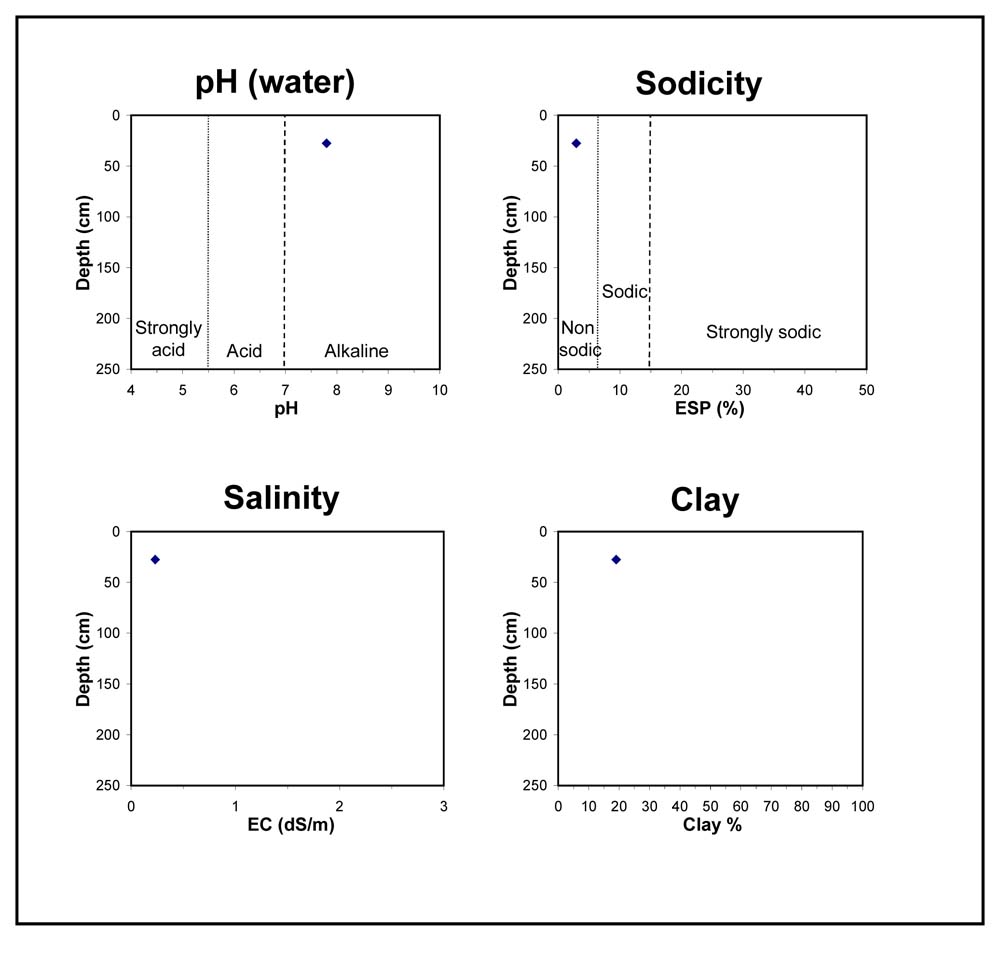
 |
This land unit occurs in the south western corner of the region. The land unit is generally composed of siliceous sand dunes and plains over calcareous material. The partly consolidated calcareous deposits were formed in an arcuate band (north west / south east trending) formed by the retreat of the Murray Sea. The siliceous dune and sand sheet material is generally of aeolian origin. Although there is a large area of this land unit in the south west of the study area there are also some isolated patches, mainly mixed amongst the Follet land unit that could not be mapped due to restrictions of scale. The sand varies from orange (GL48), to red (GL39) to a paler colour, represented by this soil type. The orange and red sands are usually associated with the calcareous material, whereas the paler sands tend to have less carbonate (e.g. GL51, GL38) or the calcareous material is greater than 2 metres deep e.g. GL50). Another soil variant occurs on the swales in between the dunes. This soil tends to have a heavier textured subsoil which may or may not have calcareous material underneath. |
| Slope: 4% | Geology: Quaternary limestone |
| Landform pattern: Gently undulating plain | Position in landscape: Dune |
| Internal drainage: Well drained |
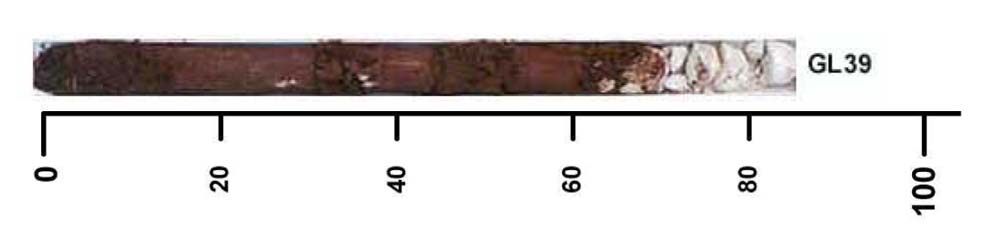
| A1 | 0-70 cm | Dark reddish brown (2.5YR3/4) loamy sand (minus), apedal single grained; abrupt transition to: |
| C | 70+ cm | Limestone |
Key profile features:
- Sandy profile
- Hydrophobic topsoil
- Shallow soil
- Sand over limestone
- Low nutrient status
- Low available water holding capacity