Victorian Resources Online (archived)
Wind erosion
|
What is it? | 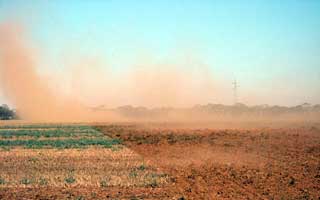 Dust arising and transported as a cropping paddock is being prepared for sowing |
| Impact Wind erosion removes valuable soil components including organic matter and nutrients. Dust storms affect the environment, aircraft operations, human health, and general comfort and amenity. Sand movement across the landscape damages fences, transport routes, and other items of infrastructure. | 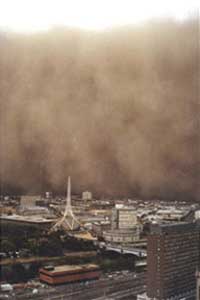 The dramatic dust-storm of February 8, 1983 over the Melbourne Arts Centre |
Management
The first consideration for the prevention of wind erosion is to reduce the velocity of wind at the soil surface through the use of vegetation, vegetative residues and surface roughness. The second consideration is to raise the aggregation and cohesion of the soil itself to increase resistance to detachment.
Related Links
The Bureau of Meteorology website provides further information on the Melbourne dust-storm of February 1983 (external link).
