Victorian Resources Online (archived)
Coast Tea-tree
Back | Salinity Indicator Plants Home | Common name home | Scientific name home | Photo Gallery | Glossary
| Coast Tea-tree photos |
| Scientific Name: | Leptospermum laevigatum |  Coast Tea-tree flowers Photo: A J Brown |
Other Common Name: | Coastal Tea-tree | |
Status: | Native to South Australia, New South Wales, Tasmania and Victoria. Introduced to Western Australia. | |
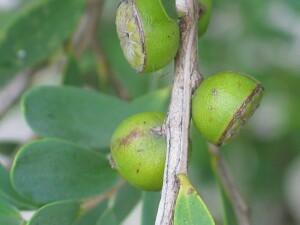
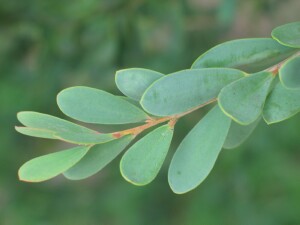
Plant Description: | A grey-green shrub to small tree, growing from 2-8 m tall. Stems are fissured and the bark flakes in thin pale strips. Leaves are broad and blunt-tipped, to 3 cm long, stiff and flat. Flowers are white and about 20 mm diameter. The flower-cup (calyx) is hairless. Fruit are non-woody and flat-topped capsules with 6-11 cells. | |
Habitat: | Common on coastal sands from Port Phillip and eastwards. Good tolerance of salt-spray conditions. | |
Comments: | There are about 83 species of Tea-tree in Australia and 17 species in Victoria. Many grow in wet conditions but are usually associated with saline soils. Widely planted in gardens, Coast Tea-tree can become weedy where it escapes and invades local indigenous habitat, such as in western Victoria, northern New South Wales and South Africa. |
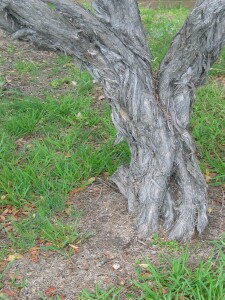 Coast Tea-tree trunk Photo: A J Brown |  Branches of Coast Tea-tree Photo: A J Brown |
|
|