Victorian Resources Online (archived)
White Clover
Back | Salinity Indicator Plants Home | Common name home | Scientific name home | Photo Gallery | Glossary
| White Clover photos | Family: Pea (Fabaceae syn. Papilionaceae) |
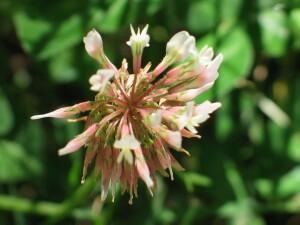
| Scientific Name: | Trifolium repens | 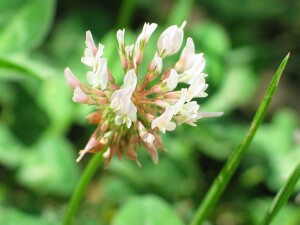 White Clover flower-head Photo: A J Brown | |||||
Status: | Native to Europe, the Middle East and northern Africa. | ||||||
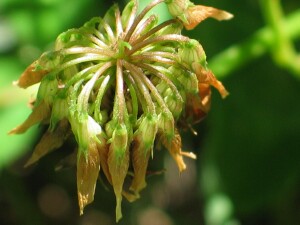
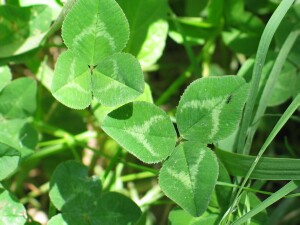
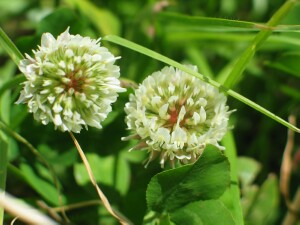
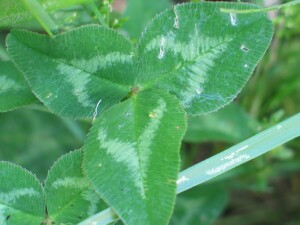
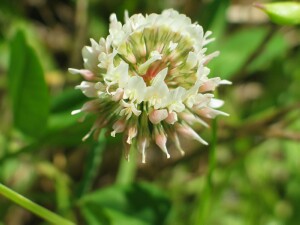
Plant Description: | Perennial herb with a prostrate habit. Stems rhizomatous, 10-30 cm long, hairless, rooting at the nodes. Leaves are trifoliate with broad-obovate to orbicular leaflets, 6-40 mm long and 10-30 mm wide, hairless, prominently veined and often with a pale crescent shaped marking on the upper surface. Stipules (leaf-like structures at the base of the leaf and flower-stalks) membranous. Flowers white or sometimes yellowish or pinkish, with more than 20 flowers, in globular heads, 15-35 mm diameter, the lower florets becoming deflexed with maturity. | ||||||
Habitat: | Widespread and commonly sown species pastures in the cooler and wetter parts of Victoria or as a component of irrigated pastures in Northern Victoria. Also found as a weed in lawns, cultivated areas and waste ground. Indicative of fresh-water habitats and has some waterlogging tolerance.
| ||||||
Comments: | A number of different cultivars of White Clover have been developed for pasture situations. Other clovers, with a perennial habit, include Strawberry Clover (Trifolium fragiferum and Red Clover (Trifolium pratense). Annual clovers may also occur in similar habitats (see Key to common annual clovers). | ||||||